How to choose the right air compressor is essential for reliable operation, energy efficiency, and cost control over time. Whether you run a workshop, a factory, or a construction site, understanding your air demand and matching it with the right compressor type can make a big difference.
Before selecting a compressor, clearly define your application:
Are you using it in a small workshop, an industrial plant, or on a construction site? Each use case has different compressed air requirements.
Measure your required airflow (CFM or m³/min) and pressure (PSI or bar). Airflow affects productivity, while pressure determines whether multiple tools or processes can operate simultaneously.
2.Choose the Right Air Compressor Size
A compressor that’s too small can’t keep up with demand, causing downtime or pressure drops.
A too-large unit increases your energy bill and upfront costs.
To size your compressor properly, conduct a professional air audit or calculate current usage and future expansion plans.
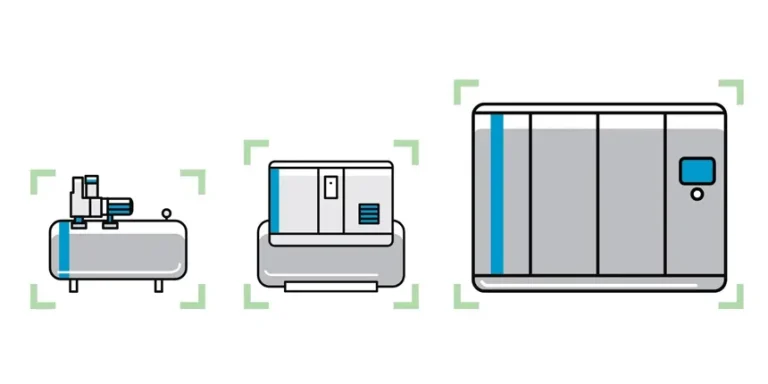
3.Compare Compressor Types: Piston vs. Rotary Screw
Type
Features
Best For
Piston (Reciprocating)
Low initial cost, simple to maintain, ideal for intermittent use, noisier, delivers high pressure
Small workshops, occasional use, budget-conscious operations
Rotary Screw
Continuous operation, energy efficient, longer lifespan, quieter, lower vibration
Production lines, automation, manufacturing, continuous use
4.Types of Rotary Screw Compressors
Fixed-Speed: Best for stable, continuous demand. Simpler structure, lowest capital investment.
Dual-Speed (FLX): Switches between low and high speed. Saves energy with moderate flexibility.
Variable Speed Drive (VSD): Adjusts output to match demand in real-time, saving significant energy. Ideal for fluctuating usage patterns.
5.Oil-Free vs. Oil-Injected Compressors
Oil-Free: Deliver Class 0 certified air purity. Ideal for industries like food, pharma, and electronics where contamination isn’t acceptable.
Oil-Injected: Use oil for sealing and cooling. Suitable for general industry use, often combined with downstream filtration systems.
6.Other Key Considerations
Noise Levels: For indoor use, quieter operation is important. Rotary screw compressors are quieter than piston types and can come with noise enclosures (≤80 dBA).
Cooling Method:
Air-cooled units work well in ventilated environments.
Water-cooled models are more efficient but require higher installation standards.
Footprint and Installation: Rotary screw compressors are compact and often come in plug-and-play configurations. Perfect for limited spaces and fast setup.
7.Energy Efficiency & Life Cycle Cost
VSD screw compressors adapt speed to demand and dramatically reduce energy costs. Though initial investment is higher, they offer long-term savings.
Piston compressors may seem more affordable upfront but cost more to run in continuous or frequent use scenarios.
Final Summary: Golden Rules for Choosing Your Compressor
Quantify Your Needs: Know your CFM, PSI, duty cycle, and future growth.
Match Budget & Use:
Occasional use and limited budget → Piston compressor
Continuous production and high reliability → Rotary screw compressor
Air Purity Matters: If your application requires clean air, go for oil-free models.
Control & Efficiency: For variable demand, choose VSD; for stable demand, consider fixed-speed or dual-speed screw compressors.
Need help selecting the perfect Atlas Copco air compressor? Contact us today — our expert team will guide you through the best solution based on your needs and budget.



ByBOAO